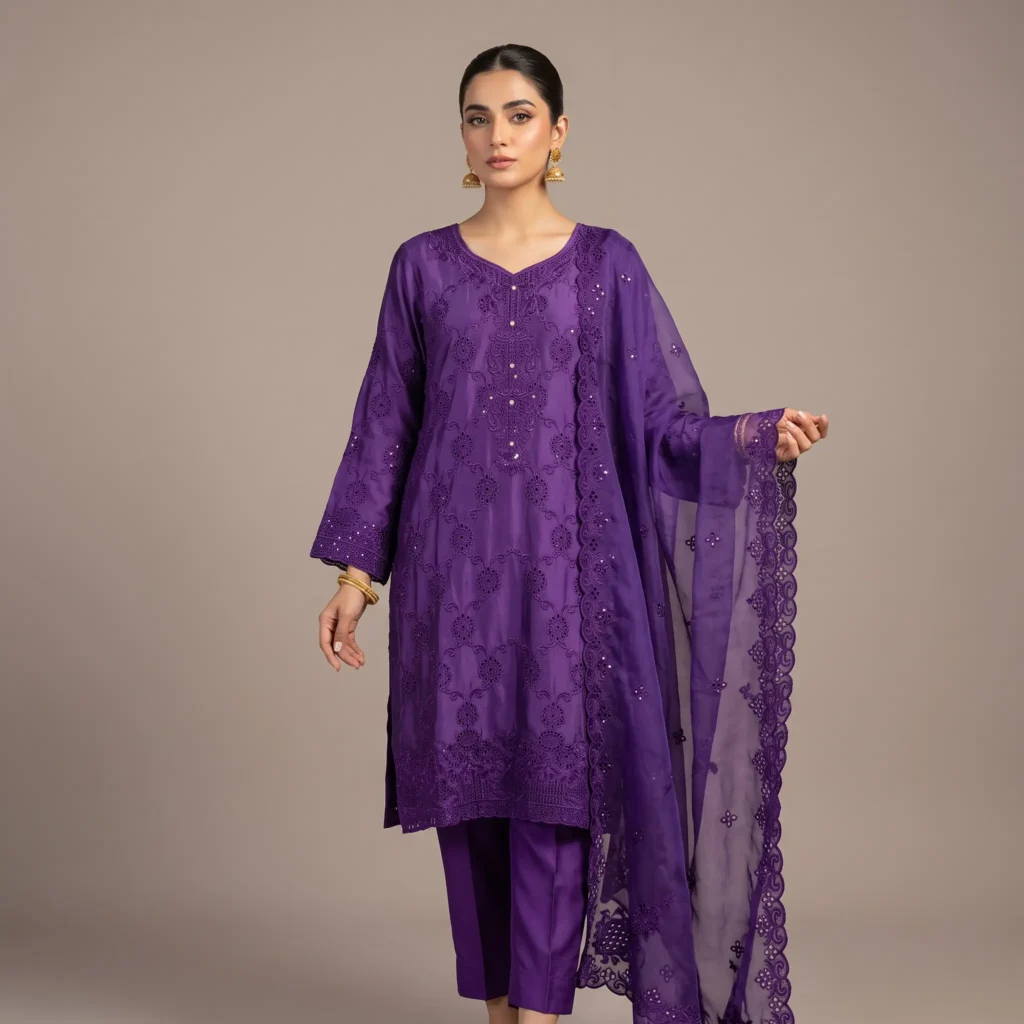
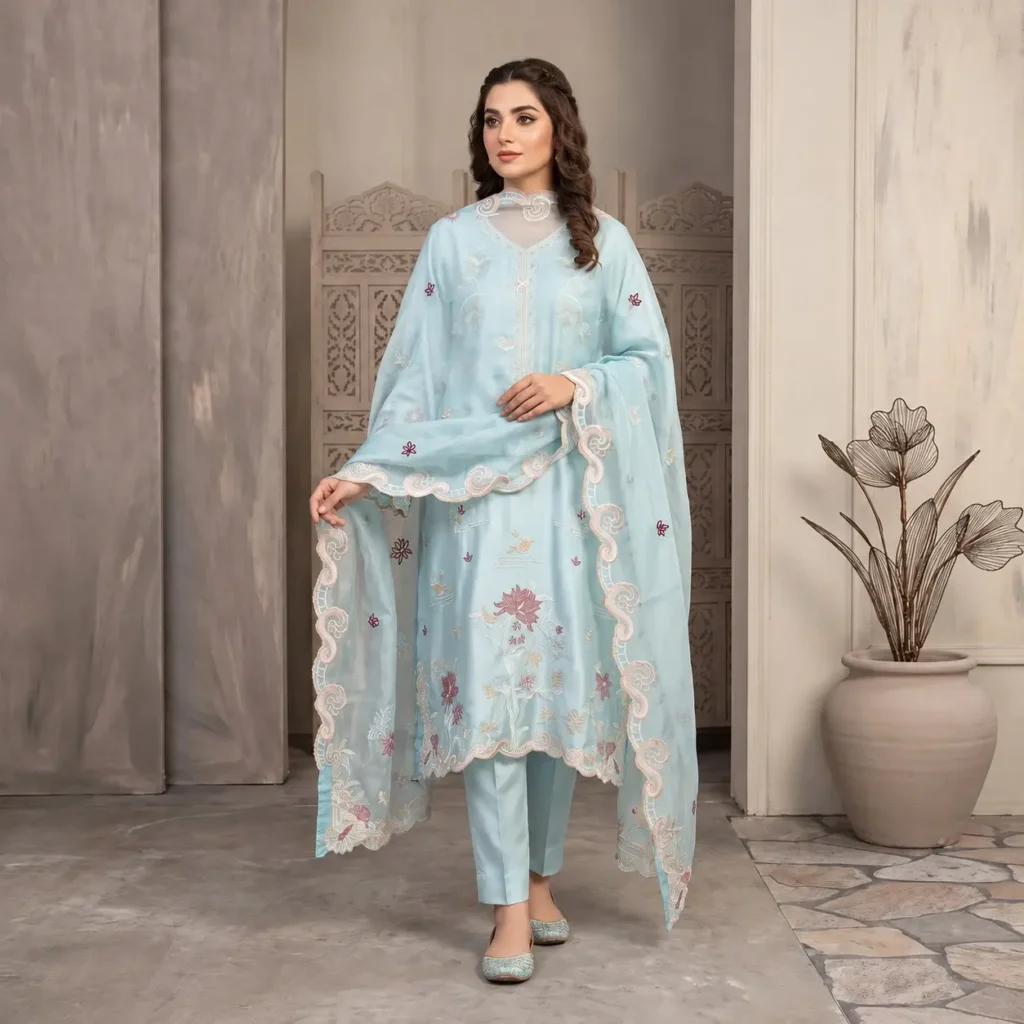
Few embroideries are as graceful as chikankari. Its delicate threadwork, soft patterns and timeless charm have made it a favourite across Pakistan for generations. In this guide, we explain what chikankari is, the most popular styles, and how to style a chikankari suit for different occasions.
Chikankari is a traditional form of hand embroidery known for its fine, delicate stitches. It often features floral and paisley patterns, usually worked in thread that matches or softly contrasts with the fabric. The result is an elegant, understated look that feels both classic and modern.
Because the work is so detailed, a well-made chikankari suit can take a long time to create, which is why it is often treated as a special piece in any wardrobe.
02 / THE GUIDE
Why Women Love a Chikankari Suit
Timeless style: Chikankari never really goes out of fashion.
Elegant but light: It looks refined without heavy embellishment.
Versatile: It can be dressed up for weddings or kept simple for day events.
Flattering: The soft patterns suit almost every body type and skin tone.
03 / STYLE NOTES
Popular Chikankari Styles
01
Chikankari 3-Piece Suit
A chikankari shirt with plain trousers and a matching dupatta is the most popular style. At Zeesh, our chikankari 3-piece ensemble pairs intricate chikan work on the shirt with a soft Sheesha Silk dupatta and plain pants.
02
Chikankari Kurta
A single chikankari kurta paired with straight pants or cigarette trousers is perfect for daytime events and casual outings.
03
Chikankari Dress
Longer chikankari dresses and frocks look graceful for dinners and festive gatherings.
04 / STYLE NOTES
How to Style a Chikankari Suit
01
For Weddings and Formal Events
Choose a chikankari suit with a richer dupatta, such as Sheesha Silk or organza. Add statement earrings, a clutch and embellished flats for a polished look.
02
For Eid
Soft pastel chikankari feels fresh and festive on Eid mornings. Pair it with gold-tone jewellery and fancy slides.
The dupatta can completely change the mood of your outfit. A plain chiffon or cotton dupatta keeps the look light and simple for daytime events. A Sheesha Silk dupatta adds a soft glow for dinners and Eid, while an organza dupatta brings extra volume and sparkle for weddings. If the shirt has heavy embroidery, choose a lighter dupatta so the handwork remains the focus.
06 / THE GUIDE
Best Colours for Chikankari
White and ivory: The most classic choice, elegant for any season.
Pastels: Soft pink, sky blue and lilac feel fresh and feminine.
Black and navy: Modern and striking for evening events.
Contrast threadwork: Coloured threads on a light base add a playful touch.
07 / THE GUIDE
Chikankari for Every Body Type
One reason chikankari is so loved is that it flatters almost everyone. Its fine, vertical patterns create a long, graceful line. If you are petite, choose a longer shirt with embroidery running down the front to add height. For a fuller figure, an A-line shirt with a relaxed fit and a straight trouser looks balanced and elegant. Tall women can carry wider trousers and longer dupattas with ease.
Whatever your shape, a comfortable fit matters most. Delicate embroidery looks its best when the fabric falls naturally rather than pulling across the body, so always check the size guide before you buy.
08 / THE GUIDE
Choosing the Right Footwear
Chikankari has a soft, delicate feel, so footwear should complement it rather than overpower it. Embellished flats with pearls or subtle crystals are a perfect match. For everyday wear, simple flats in neutral colours work well.
Hand wash gently in cold water with a mild detergent, or choose dry cleaning for silk pieces.
Do not scrub or wring the embroidered area.
Dry in the shade to protect the colour and thread.
Iron on the reverse side on low heat, with a cloth on top.
Store folded in a cotton bag to keep the threads safe.
10 / THE GUIDE
How to Spot Good Quality Chikankari
Neat stitches: The embroidery should be even and tidy on both sides.
Good fabric: The base fabric should feel soft and hold the stitches well.
Clean finishing: Check the seams, hems and neckline.
Balanced design: The pattern should look evenly spread and well planned.
11 / THE GUIDE
Common Styling Mistakes
Adding too much heavy jewellery, which hides the delicate work.
Choosing a size that is too tight, as chikankari looks best with a relaxed fit.
Pairing it with bulky footwear that clashes with its soft look.
12 / THE GUIDE
Shop Chikankari at Zeesh
At Zeesh, we create Pakistani designer dresses that celebrate traditional handwork. Our chikankari 3-piece ensemble is stitched and ready to wear in sizes XS to XL, and you can complete the look with our fancy flats.
Want to see these styles in person? Visit Zeesh at Shop No. 15-C, 5th Street, Sunset Lane, DHA Phase 2 Extension, Karachi. We are open every day from 11:00 AM to 11:00 PM, or you can message us on WhatsApp at 0336 1119744.
Embellished flats, pearl slides and simple flats all complement chikankari well.
14 / THE GUIDE
Final Thoughts
A chikankari suit is one of the most graceful and versatile outfits you can own. With the right dupatta, jewellery and footwear, it works for Eid, weddings and everyday events alike. Find your favourite piece in the Zeesh collection.